Review: The Girl on the Train by Paula Hawkins

27 Feb

The Girl on the Train by Paula Hawkins.  Riverhead Books, January 2015

  • ISBN-10: 1594633665
  • ISBN-13: 978-1594633669
  • Thriller, psychological thriller, mystery, suspense

The plot

Image courtesy of Goodreads

Rachel takes the same train each day on her commute to and from London.  Each day she looks out at the houses that parallel the train tracks.  She begins to actively observe the lives of a seemingly perfect couple who she sees as her daily train moves past their house.  One day while reading the newspaper, she discovers the woman she has been watching each day is missing.  Feeling as though she has a connection with the couple, Rachel decides to investigate the woman’s disappearance. She is quickly drawn into a complex web of conflict and deceit that she could not have imagined in her daily observations of the perfect couple whose life she watched as her daily trains trundled past their house.

Book Snitch’s thoughts

I honestly could not put this book down once I had read the opening chapter.  Whenever I take a train, I enjoyed spending time looking out of train windows and imagining the lives of the people whose houses I can see from the tracks.  Humans tend to be voyeuristic, and I have found we often tend to see the ‘flawless’ versions of people’s lives and we wonder what it would be like to live like someone else.  I think that Hawkins cleverly played on the idea that we like to observe others, so I enjoyed the premise of the flawed perception that Rachel has of the couple she watches.  Hawkins has alternating first person narratives, including the voice of the woman who goes missing, which has a similar feel to the style Gillian Flynn uses in Gone Girl.  She cleverly plants a lot of cryptic clues and a couple of false leads which kept me guessing throughout the novel until the finale.  Hawkins definitely manages to maintain suspense and a punchy pace throughout the narrative.  Rachel, the primary protagonist, is a flawed narrator with a drinking problem that results in only fragmented perceptions of events.  This was a clever gimmick which made the novel an nail-biting read.

 Who should read this?

I would recommend this to anyone looking for a page-turner, and more specifically fans of mystery or thrillers.  If you enjoyed the likes of Gillian Flynn’s contemporary psychological mysteries Gone Girl or Sharp Objects, this would also be a great choice.  My older students might enjoy this as a holiday read, and I will be recommending it to them for their Spring Break book list.

Book Snitch rating:  5/5 stars

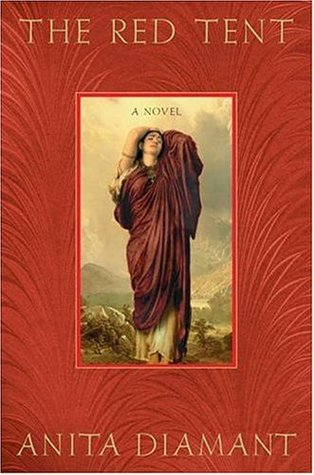
Book review: The Red Tent by Anita Diamant

8 Feb

The Red Tent by Anita Diamant.  St. Martin’s Press (Kindle edition sold by MacMillan CA) April 2010

Image courtesy of Goodreads

  • ISBN: 0312169787
  • Historical fiction

The plot

Diamant re imagines the story of Dinah, a character who is briefly mentioned in the Bible as having a tragic fate in the book of Genesis.  Dinah is the daughter of Jacob, whose story will probably be more familiar to readers of Genesis.  Dinah greets the reader as an old friend and shares the story of her life, starting before her birth with the arrival of the taciturn but strong Jacob in the land of the Canaanites.  Dinah reveals the complex dynamics of her large family, with the recurrent motif of the women’s respite in the novel’s namesake, the red tent.  Here, in a tent that is characterized by the colour of life, women gather to rest during their monthly cycles or give birth.  Dinah reveals the spiritual practices and physical rituals of the Canaanite women,and they endure joy, grief, jealousy, life and death.  Then Dinah comes of age, and their world is changed forever…

Book Snitch’s thoughts

I was initially curious about this novel, as I have taught The Handmaid’s Tale by Margaret Atwood, and I recognized a link between Diamant’s story and one of the biblical allusions Atwood uses.  Atwood references the story of Rachel, Bilah and Jacob in her novel, specifically because one of the Genesis stories relates Rachel asking her husband, Jacob, to have children with her handmaiden Bilah as she is unable to conceive. In The Red Tent, Jacob is Dinah’s father and her mother, Leah, is sister to both Rachel and Bilah.  I wanted to see how this strange story of surrogacy and the brief but tragic mention of Dinah in the Bible played out in a novel, as I have found the brief references to tragic stories in the Bible a little unsatisfying as narratives.

I was quickly drawn into the complex dynamics of this family, particularly the primal desire of all of the sisters to have children.  The descriptions of childbirth in this biblical era were pretty captivating.  The narrative style, with Dinah as the narrator, was fine though predictable.  The plot itself in the first two thirds of the novel had a lot of momentum, but I felt like this waned in the close of the novel, and the resolution was anti-climatic.  This said, Diamant succeeded in creating a more tangible glimpse into the ancient past, and the alien customs of the Canaanites and Egyptians.

Who should read this?

I would recommend this to my female friends as a pretty interesting lens into the life of women in the biblical era.  Those who have an interest in historical fiction, or would like to further imagine the lives those depicted in Genesis might also enjoy The Red Tent.

Book Snitch Rating:  3/5 stars


2014 Reading Challenge

3 Jan

With the unfolding of a new year comes the excitement of new horizons and new achievements.  For me, one of the ways this takes form is in reading challenges.  Inspired by a fellow WordPress book blogger The Librarian Who Doesn’t Say Shhh! I have created two reading challenges of my own for 2014.

The ’12 books for personal pleasure’ challenge

As a high school English teacher, I don’t have a lot of down time in term time for reading that is unrelated to teaching, or more specifically, the texts I am teaching.  Passion comes from new inspiration, so this challenge is for me to step away from the mentality that I often fall into: that I should only be reading texts that are directly related to my teaching during term time.  The aim of this challenge is to allow myself time to enjoy reading for reading’s sake.  This is an investment in my teaching, because being excited about your discipline is a huge part of being an effective educator.

The non-fiction challenge

Teaching the IB Language and Literature course places equal focus on fiction and non-fiction texts.  The aim of this challenge is to read a range of non-fiction including memoir, autobiography and travel literature amongst others.


Review – Rose Under Fire

21 Jun

Rose Under Fire by Elizabeth Wein.  Disney Book Group, September 2013

Image courtesy of NetGalley

Image courtesy of NetGalley

The Plot

Rose Justice, a young American pilot, is captured by the German army during World War Two as she is returning from a mission and is sent to Ravensbrück concentration camp.  Rose meets extraordinarily strong women in the camp, called “the Rabbits” who were used for medical experimentation by the Nazis.  Rose faces unimaginable horror in the camp, and learns the true meaning of hunger, desperation and the lengths to which the female prisoners will go to survive.

Book Snitch’s thoughts

Female prisoners during selection at Ravensbruck.  Image licensed under public domain via Wikimedia

Female prisoners during selection at Ravensbrück. Image licensed under public domain via Wikimedia

I read the pre-release version of Rose Under Fire after requesting it from NetGalley.  I was drawn to the premise of the novel, as I have previously taught World War II and Holocaust themed works through the novel by Joyn Boyne, The Boy in the Striped Pajamas and the non-fiction memoirs: Primo Levi’s If This Is A Man, and Elie Wiezel’s Night.  I was drawn to Wein’s decision to portray the experience of concentration camp incarceration from a female perspective.  It is a powerful and challenging read which gives a unique view into the Holocaust by focusing on the merciless medical experiments performed on the female prisoners at Ravensbrück.

Wein uses Rose as the first person narrator, and structures a large portion of the novel as a series of Rose’s diary entries describing her experiences at the camp (both techniques which will appeal to young adult readers).  Though the narrative at times seemed repetitive and drawn-out, Wein arguably captures the experience of tediously enduring time, which Rose and her fellow prisoners face as they wait for death or liberation.

One of the key motifs throughout the narrative are the poems that Rose recites for the other prisoners in return for extra bread.  The poems accentuate the misery which Rose and her fellow prisoners and friends endure at Ravensbrück, as well as revealing the fragile beauty of life.

Wein is careful to balance the horror of Rose’s descriptions with the touching portrayal of friendships and loyalty that she experiences in Ravensbrück.  There are even moments of humour, where we are reminded that many of the young women in the concentration camp were only teenagers.

Who should read this?

I agree with NetGalley’s description that this is a novel for readers aged fourteen years and older.  Although this is a companion novel, it can be read as a stand-alone novel also.

Rose Under Fire certainly feminizes the theme of war, and reminds young readers that some of the greatest battles fought during World War II were personal ones, without physical weapons and soldiers.

4 stars

Wednesday Wisdom from a DP recommended read – Oryx and Crake

11 Jun

Wednesday wisdom this week comes from a DP recommended read:

Oryx and Crake by Margaret Atwood. McClelland & Stewart (2003), Bloomsbury (2003) & Doubleday (2003)

  • ISBN-10: 1844080285
  • ISBN-13: 978-1844080281
  • Book 1 of the MaddAddam trilogy (book 3: ‘MaddAddam’ is expected to be published in September 2013)
  • Dystopian fiction; post-apocalyptic fiction; thriller; suspense; adventure

Five reasons why will DP students should read this novel:

  1. Oryx and Crake is a post-apocalyptic allegory of a future world ravaged by global warming, technology and human engineering.  These are all topics that students are exposed to across their curriculum, and these usually give uninhibited imaginative license for students to discuss what the future may bring.
  2. Atwood’s brilliant symbolism which is clever yet accessible for teenage readers.
  3.  The plot twists.  Students will literally gasp aloud at several points in the novel.
  4. The hybrid animals.  Pigoons, Rakunks and Wolvogs…ask your students to imagine different combinations of hybrids; a great lesson starter.
  5. The potential for assessment in the DP Literature or Literature and Langauge programme.
    • Superb potential for an imaginative Written Assignment or an Individual Oral Presentation
    • Has an array of passages that could be used for the Individual Oral Commentary
    • Rich in content for an analytical essay (paper II)
    • Many opportunities for making links with Theory of Knowledge
Wednesday Wisdom from Margaret Atwood

Wednesday Wisdom from Margaret Atwood

Review – Shades of Earth (Across the Universe trilogy)

6 Jun

Shades of Earth by Beth Revis.  Razorbill, 2013

Book cover courtesy of www.bethrevis.com

Book cover courtesy of www.bethrevis.com

Shades of Earth:

The plot

Part of Godspeed has finally landed on Centauri Earth, the new planet where the threat of the “monsters” revealed in book two (A Million Suns) becomes a frightening reality for Elder and Amy.

Despite being unnerved by the mysterious sounds of the unknown creatures outside of the ship, Elder resolves to bravely help his people to re-settle on Centauri Earth and begin a new colony.  Tensions arise when the “frozens” thaw out, and the Earth-born humans, including Amy’s parents, wake up from their frozen sleep and begin to initiate the military operation they were trained for, with no regard for Elder’s rule of the colony.  Distrust quickly builds between the Earth-born and the ship-born humans, but the biggest enemy for all of them lies beyind the walls of Godspeed.

Book Snitch’s thoughts

This book focuses on the moment that readers had been waiting for throughout the last two books in the trilogy; Amy’s arrival on the planet she had travelled across the universe to get to.  Revis doesn’t disappoint, and continues to build the sense of claustrophbia which we experienced when Elder and Amy were trapped on Godspeed in space.  Now though, the tension mounts from their being trapped on an unknown planet where there are more secrets and more threats to their survival.

Revis doesn’t miss a beat with keeping up the tension in Shades of Earth.  First, Elder and Amy have to land the shuttle in a white-knuckle ride where everything that could go wrong, does. Then they hear unfamiliar noises beyond the walls of the shuttle which signals the arrival of the “monsters” which were spotted on Centauri Earth.

The alternating narrative perspective between chapters gives readers a chance to see the conflicting problems which Elder and Amy experience.  Elder struggles with a sense of guilt about leaving behind half of his people on the orbiting part of Godspeed, and the introduction of Amy’s father as the leader of the frozen military personnel from Sol Earth makes things even more difficult for Elder.  Amy is caught between the Earth-born and the ship-born people, trying to unite them in their common purpose: to survive on their new hostile planet.

The final installement of the Across the Universe trilogy is a thrilling read, and Revis cleverly switches the setting and introduces new characters to keep the plot interesting and fresh.  Romance fans will be pleased about the increasingly feverous kisses between Elder and Amy.  Sci-Fi fans will enjoy the descriptions of Centauri Earth and the hints of the non-human life forms which remain largely hidden for the first half of the novel.  Mystery fans will relish the inexblicable clues which continue to point to that fact that Godspeed’s mission is certainly not all it seemed to be when Amy and her family were frozen and stored on the ship.

5 stars


Who should read this?

Book Snitch recommends this final installement for fans of the Across the Universe trilogy.  It doesn’t function well as a stand-alone read, as much of the plot is tied to events from the first two books in the series.

Notes for educators

This trilogy would work well for independent reading projects or student book clubs.  There are many activities which could stem from reading this trilogy, such as:

  • Creating map of Centauri Earth, adding quotations containing descriptions from the novel
  • Create a timeline of events in the novel using Timeglider, an interactive Edtech tool that allows students to create timelines, adding images, videos and URL links.  You could ask students to imagine what they think happens on Sol Earth between now and when Amy leaves on Godspeed, to her arrival on Centauri Earth.
  • Recording verbal ‘clues’ for Amy and Elder from the perspective of Orion or another character who lived on Godspeed and discovered some of the secrets of the ship.  Try recording students’ voices using Voicethread and sharing their recordings with other readers to get feedback on their clues.  Alternatively you could ask students to record a verbal book review and share these on your school library blog for other student readers.

Wednesday wisdom

5 Jun
Wise Wednesday from Shakespeare

 Wednesday wisdom from Shakespeare

Masterpiece Monday: Enduring Love

3 Jun

Enduring Love by Ian McEwan.  Jonathan Cape (1997), Vintage (1998, 2004)

Image via Flickr under CC BY 2.0 license

Image via Flickr user carolynconner under CC BY 2.0 license

  • ISBN-13: 9780099276586
  • ISBN-10: 0099276585
  • Contemporary fiction

The plot

One windy afternoon in the English Chilterns, a hot air balloon rips away from it’s moorings, and a young boy is helplessly lifted into the air while his grandfather battles to keep the balloon from rising off the ground.

Joe Rose, a scientific journalist picnicking with his partner Clarissa, rushes to help.  Joe is joined by four other men, including Jed Parry.  In the tragic struggle to rescue the boy, Joe exchanges a momentary glance with Jed which instigates a compulsive, dangerous obsession. Jed becomes besotted with Joe, convinced that Joe has fallen in love with him.

Why is this a masterpiece?  Why is it a DP recommended read?

There are many reasons why this novel should be considered instead of McEwan’s more commonly chosen novel, Atonement.  Enduring Love is a challenging read for DP/higher grade students.  Here are four good reasons Book Snitch recommends Enduring Love:

  1. The breath-taking opening.  McEwan uses this extraordinary opening sequence, a tragic hot air balloon accident to coincidentally bring Jed Parry into Joe’s life.  It is visually evocative and a tense, unusual start which leaves the reader unnerved just like Joe.
  2. The TOK angle.  One of the key tensions throughout the novel is he conflict between Rationalism and Empiricism.  The dramatic opening is juxtaposed by the slow growing tension in the plot as the reader learns that Joe is a man of empirical principle, one for whom there are laws which guide the workings of the world.  Jed Parry’s irrational obsessions canot be explained through scientific laws, and Joe finds himself helpless as he struggles to endure Jed’s inexplicable love.  There is a lot of opportunity to discuss Theory of Knowledge ways of knowing (emotion, reason, sense perception, language, belief, faith, intuition and memory) and how these inform what Jed and Joe constrastingly see as knowledge and truth in the novel.
  3. The suspense.  Student readers respond well to McEwan’s masterful creation of ever-increasing suspense.  Joe, the novel’s first person narrator, is soon doubted by his partner Clarissa and the Police when he tries to convince them that Jed is stalking him.  Through Joe’s inability to provide concrete evidence of his claims,  McEwan plays a clever trick on the reader, as we also start to doubt the reliability of his perceptions.  Students love this twist when Joe escapes what he perceives as an attempted murder.
  4. The potential for interesting and creative assignments.  The novel offers many layers of meaning and engagement for student readers, making it a great tool for inquiry-based learning.  Activities could include:
  • Writing from Jed or Clarissa’s perspective
  • Writing a third appendix to the novel
  • Adapting the conversation between Joe, Clarissa and their friends the evening after the balloon accident as a screen-play
  • A concept map showing all of the signals Jed believes Joe gives him to communicate their love, with TOK links exlaining how Jed uses ways of knowing to conclude that Joe loves him

Introducing the novel

One suggested way to intoduce this novel could be to use the lyrics of Every Breath You Take by The Police.  This song is often mistaken for a devoted love song.  As the opening four lines show, it is also about the obsessessive nature of love:

“Every breath you take
Every move you make
Every bond you break
Every step you take
I’ll be watching you”

After playing the lyrics to your student, ask them to give their ideas about what the song is about.  At this point share with them the title of the novel ‘Enduring Love’ and ask them to consider the connotations the title holds.  guide the discussion to include the differing aspects of love.  You might include the following questions:

  • What is the definition of love? (for IB Diploma students you could make the connection with language as a way of knowing and the problem of definitions)
  • How do people behave when they are in love?
  • How do you know if love is requited?
  • What role does perception play in finding love?
  • Does love at first sight exist?
  • What does enduring love mean?  What else could it imply about the nature of love?

Try a tech tool

Visible thinking routines created by Harvard’s Project Zero are a fantastic way to get students thinking about a new topic.  One of my favourites is called Compass Points.  I would recommend using this routine to get students thinking about the idea of enduring love as a concept which has different angles.

I often use a Padlet to record student ideas and encourage student communication about this idea.

  • Padlet is an interactive virtual pinboard
  • Students can collaborate to add information and ideas to the same pinboard
  • Using it for  the compass points routine allows students to see each other’s ideas and record group thinking about the cenral theme of the novel
  • Check out more reasons why Padlet is great for education by browsing the features it offers

Using Compass Points will provide students with a broad basis for considering the theme of enduring love as they read and analyse the novel.  You can repeat the routine later with different propositions which will come up through reading the novel, such as Joe’s steadfast empirical view of the world.

You can see an example of IB English B Diploma students sharing their ideas in a compass points routine which asked them to consider different aspects of reality television.

Review: Skin

1 Jun

Skin by Donna Jo Napoli.  Amazon Children’s Publishing, August 2013

Image via Goodreads

Image via Goodreads

  • ISBN: 1480534986
  • ISBN13: 9781480534988
  • YA Lit

The Plot

Sixteen year old Guiseppia (who calls herself Sep) wakes up one morning with white lips. She decides to hide the strange discolouring with lipstick and goes to school, hoping her natural colour will return the following day. Only it doesn’t. Sep finds out that she has vitiligo, a skin condition which causes a loss of pigmentation in patches of skin over the body. It’s harmless to her health, but there is no cure for it. The doctor tells her it will inevtitably spread over her body, and she won’t be able to hide it with lipstick forever. Sep struggles to come to terms with her changing appearance, especially when Joshua Winer, captain of the football team, starts to flirt with her. Will Sep manage to hide her vitiligo from Joshua and the rest of the school?

Book Snitch’s thoughts

This novel is an easy read dealing with the insecurities of transitioning into being a young adult. The plot is fairly predictable but teen readers will like the romantic storyline, and will be able to relate to the importance of appearances in high school. The premise of the novel is sound, and it has the right ingredients for a YA read: family conflicts; self-identity; hormonal tantrums and lusty romance.  Napoli delivers a sound, realistic message about the difference between outer appearances and inner-identity.

Who should read this?

This would make a good independent summer read for students looking for a break from school curriculum prescribed texts.  There is some sexual content, so Book Snitch would recommend this to readers aged fifteen upwards.

3 stars

Review: Wintergirls

31 May

Wintergirls by Laurie Halse Anderson.  Speak (2009), Viking (2009) Scholastic (2011)

  • ISBN-13: 978-0-14-241557-3
  • ISBN-10: 0-14-241557-X
  • YA fiction

“I     won’t     pollute      my       insides     with    Bluberridazzlepops or muffins or scritchscratchy shards of toast, either.  Yesterday’s dirt and mistakes have moved through me.  I am shiny and pink inside, clean.  Empty is good.  Empty is strong.”

Wintergirls, chapter 003.00

The Plot:

Eighteen year old Lia suddenly learns that her former best friend, Cassie, died alone in a motel room.  Cassie and Lia used to be inseperable, united in their life-threatening quest to both be size oo.  Haunted by the fact she didn’t answer Cassie’s calls on the night she died, Lia struggles to hide her deadly secret…her promise.  Lia is still determined to be the skinniest girl in school.

Book Snitch’s thoughts:

Narrated by Lia throughout, this novel squeezes your insides with horror from the opening chapter.  Anderson’s narrative style is constructed so that we see the frightening pathology of anorexia nervosa right from the second chapter where Lia makes excuses for not having any breakfast:

Beacuse I can’t let myself want them because I don’t need a muffin (410), I don’t want an orange (75) or toast (87), and waffles (180) make me gag.”

The power of the novel is delivered through Anderson’s vivid symbolism, which conveys the impact that anorexia has on Lia and her family.  Lia’s grossly distorted perceptions of herself are conveyed through her unforgiving stream of consiousness, and the chilling coldness motif  which shows her physical and emotional deterioration.  Anderson portrays Lia’s obsessions with weight in obvious and subtle ways, including writing the chapter numbers as though they are on a scale, and in Lia’s careful lists of food (with the calorie count always added in parentheses).

Who should read Wintergirls?

Book Snitch recommends this novel for mature YA readers.

Notes for educators

This novel doesn’t sugarcoat the reality of anorexia. The narrative is intense in several places, containing descriptions of death, physical and emotional self-harm and the supernatural.

This novel would work well as supplimentary independent reading in a unit based on the theme of identity.  Book Snitch would recommend responding to the text through activities related to imagery and symbolism in Wintergirls.

One possibility is to have students create their own book trailers using Creative Commons licensed images would be a great way to see if they have understood Anderson’s use of symbolism.  Alternatively, students could create their own films promoting awareness of anorexia, particularly the emotional impact it has on the sufferer and their friends and family.

More information about using iMovie and Creative Commons licensed images with your students is available on Resources and Teaching ideas page.

Design a site like this with WordPress.com
Get started